iPhone Duo Australia: is Apple’s $3,499 foldable worth it?
The short version: Apple’s first foldable phone, the iPhone Duo, goes on sale in Australia on 23 October 2026 starting at $3,499 — rising to $5,899 for 2TB. It’s a 7.6-inch tablet that folds into a 5.4-inch phone, with the A20 Pro chip and Apple Pencil support. It’s the most expensive iPhone ever sold here. Whether it’s worth it depends entirely on whether you’ll actually use the folding part, because you’re paying roughly double a Pro Max for the privilege.
Australian price and where to buy
- 256GB: $3,499 AUD
- 512GB: $3,899 AUD
- 1TB: $4,699 AUD
- 2TB: $5,899 AUD
- Where to buy: Apple Store, major carriers and retailers (from pre-order, 16 Oct)
- Price checked: 6 October 2026
For context, that’s $1,500+ more than the top-end regular iPhone. The 2TB model at $5,899 is the priciest iPhone Apple has ever sold in Australia. All models are eSIM-only — no physical SIM slot, anywhere in the world.
Australian release date and availability
- Announced: 9 September 2026 (Apple “Surprise and Shine” event)
- Pre-orders: 16 October 2026
- On sale: 23 October 2026 (Australia in the first wave — 70+ countries)
- Availability: Pre-order from 16 October
What is the iPhone Duo?
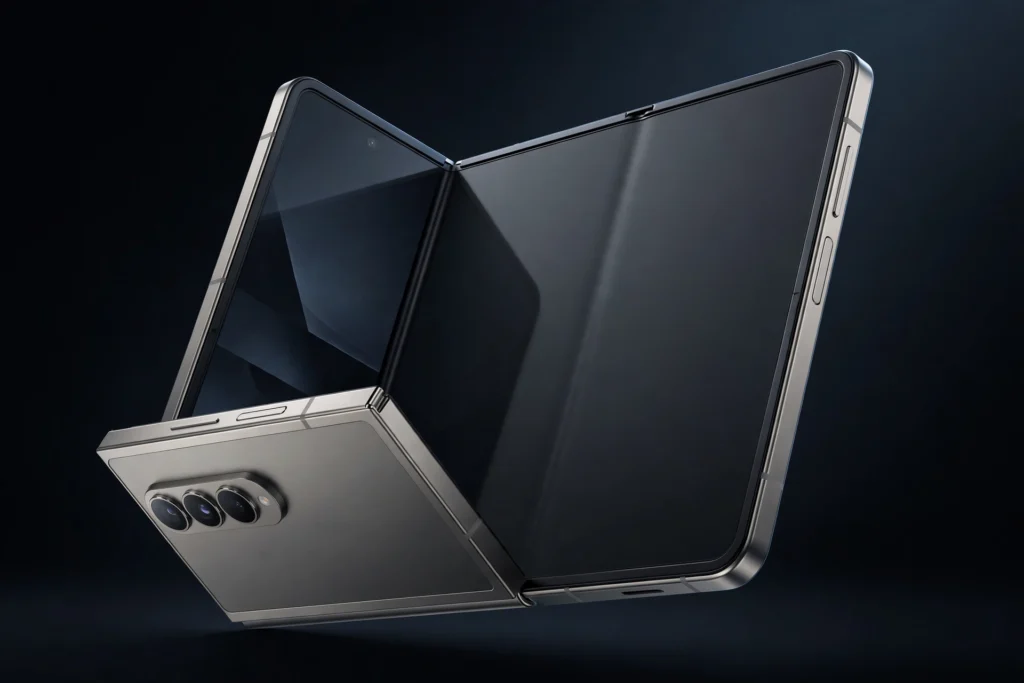
Apple’s first folding phone. Closed, it’s a 5.4-inch phone — smaller than a regular iPhone. Open it like a book and you get a 7.6-inch display, roughly iPad mini territory. It runs on the A20 Pro chip, supports Apple Pencil, and unlocks with a Touch ID sensor in the side button (no Face ID — there’s no room for the sensor array in a folding chassis).
It comes in two colours: Star White and Night Sky. That’s it — no Product Red, no playful options. Apple is treating this as a serious, expensive device for serious, cashed-up buyers.
Key specs
- 7.6-inch inner folding display / 5.4-inch outer display
- A20 Pro chip
- Apple Pencil support
- Touch ID (side button) — no Face ID
- eSIM-only worldwide
- Colours: Star White, Night Sky
- Storage: 256GB / 512GB / 1TB / 2TB
iPhone Duo vs Galaxy Fold 8
The obvious comparison is Samsung’s Galaxy Fold 8 — Samsung has been making foldables for eight years, so Apple is the newcomer here, not the pioneer. What Apple brings: the A20 Pro (likely faster than Samsung’s chip), Apple Pencil support, and the iOS/iPadOS app ecosystem on a folding screen.
What Samsung brings: eight generations of hinge refinement, a more mature folding-app ecosystem, and — critically — a lower price. The Fold 8 undercuts the Duo significantly in Australia.
The honest framing: Apple isn’t selling a better foldable. It’s selling a foldable for people who won’t buy Samsung.
Who it’s for (and who should skip it)
Consider it if: you’re all-in on Apple and have been waiting years for a folding iPhone, you genuinely multitask on your phone (documents, spreadsheets, reading), or you want a tablet that fits in your pocket and money is no object.
Skip it if: $3,499 makes you wince (it should — that’s the point), you’re happy with a regular iPhone, you use a physical SIM (there isn’t one), or you want a proven folding hinge — Samsung has eight years on Apple here.
Our verdict: is the iPhone Duo worth it?
Let’s do the maths Apple hopes you won’t do. A regular iPhone Pro Max does 95% of what the Duo does for roughly half the money. The $1,500+ premium buys you one thing: a screen that folds. If you’ll open that screen ten times a day for real work, the premium might make sense. If you’ll open it to show friends at barbecues for a month and then leave it closed, you’ve bought a very expensive party trick.
First-generation Apple hardware also has a track record: the first Apple Watch was slow, the first AirPods were mocked, the first iPad had no camera. They all got good — a year or two later, for less money. The Duo is a first-generation folding device from a company with no folding track record, at the highest price Apple has ever charged.
Verdict: not worth it for most people, at this price, in this generation. If you’re an Apple loyalist with $3,499 to spend and you understand you’re paying early-adopter tax, enjoy it — it’ll be a lovely device. Everyone else: wait for the Duo 2, or buy a Pro Max and a holiday with the change.
Note: the market now calls Samsung’s competing foldable the Galaxy Fold 8 (not Fold 7 as earlier reported). We’ve updated our comparison framing accordingly.
Alternatives worth considering
- Samsung Galaxy Fold 8 — the mature foldable: eight generations of hinge development, lower Australian price, proven folding-app ecosystem.
- iPhone Pro Max (current) — 95% of the experience for roughly half the money. The rational buy.
- iPad mini + iPhone — the Duo’s pitch is “phone that becomes a tablet.” Two separate devices do it better and cheaper, if you don’t mind carrying both.
iPhone Duo FAQs
How much is the iPhone Duo in Australia?
From $3,499 (256GB) to $5,899 (2TB). The 512GB is $3,899 and the 1TB is $4,699.
When is the iPhone Duo released in Australia?
Pre-orders open 16 October 2026, on sale 23 October 2026. Australia is in the first wave of 70+ countries.
Does the iPhone Duo have a SIM card slot?
No — it’s eSIM-only worldwide. Make sure your carrier supports eSIM before buying.
Does the iPhone Duo have Face ID?
No. It uses Touch ID in the side button — there’s no room for the Face ID sensor array in the folding design.
Is the iPhone Duo better than the Galaxy Fold 8?
Different strengths. The Duo has the A20 Pro and Apple Pencil support; the Fold 8 has eight years of hinge refinement and a lower price. Neither is objectively “better” — it depends on your ecosystem.
Sources
- Finder — iPhone Duo foldable price, specs and availability in Australia
- MacRumors — iPhone Duo pre-order and release date details
Disclosure: This is an editorial verdict piece, not a sponsored post. It’s Released has not tested the iPhone Duo and has no commercial relationship with Apple. Prices checked 6 October 2026 and may change. We may earn a commission from retailer links at no extra cost to you — we’ll always label them.
Related launches
More 2026 flagship tech: our briefing on the Samsung Galaxy S26 Ultra, and the Ray-Ban Meta Gen 3 smart glasses.